
Golf E-Commerce Advertising ·
Google Shopping vs. Meta Ads for Golf Apparel Brands
Compare Google Shopping and Meta Ads for golf apparel: purchase intent, creative, product feeds, margins, and measurement to guide your next test.
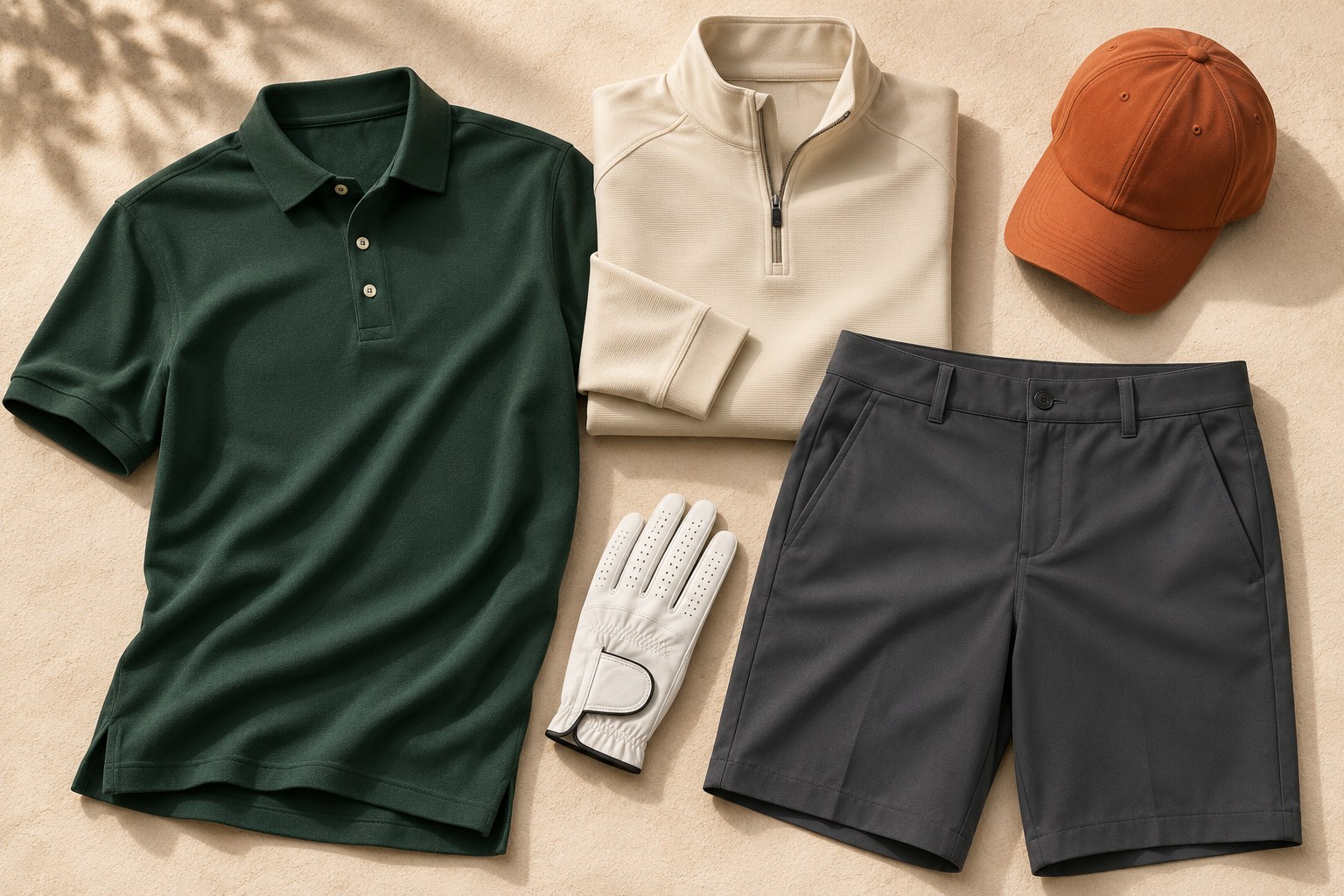
For a golf apparel brand, the choice between Google Shopping and Meta Ads depends on what you need to prove next. Are shoppers already searching for the products you sell? Does the collection need to be seen in motion before its value becomes clear? Can each order support the cost of acquiring it?
A useful channel decision starts with those questions. Shopping can put products in front of people comparing options. Meta creative can introduce a brand and demonstrate why an outfit belongs in someone’s golf wardrobe. Both can contribute to purchases, and neither guarantees profitable growth.
1. Compare the buying situation, not just the platform
A shopper searching for a golf rain jacket has expressed a product need. A strong image, relevant description, competitive offer, and available size can help your product enter that comparison. That makes Shopping a practical candidate when your assortment matches identifiable demand.
Someone encountering an apparel video while browsing social content may have no immediate purchase plan. The creative needs to earn attention and make the product relevant: fit through a swing, layering on a cool morning, or styling that works beyond the course. This makes Meta worth testing when the brand’s appeal benefits from demonstration.
These are planning distinctions, not fixed rules about every buyer. Social ads can reach ready-to-buy customers, while Shopping clicks can come from early researchers. Judge the actual customer journey rather than assigning all discovery to one platform and all conversion to the other.
2. Understand what you are actually comparing
Google Shopping is an advertising format, while Meta Ads describes a broader advertising platform. Keep campaign types clear in your reporting. Google’s Shopping overview explains that Shopping ads use Merchant Center product data rather than a positive keyword list and can run through Shopping or Performance Max campaigns.
A Performance Max campaign can serve beyond Shopping inventory. Do not describe its entire result as a Shopping-only test. If your goal is to understand product-led search demand, specify which campaign structure and inventory you are evaluating before drawing conclusions.
| Decision | Google Shopping | Meta Ads |
|---|---|---|
| Initial hypothesis | Capture relevant product demand | Introduce or demonstrate a compelling offer |
| Main preparation | Accurate product data and strong product pages | Useful creative concepts and a clear purchase journey |
| Apparel concern | Variant accuracy, price, and size availability | Fit, styling, differentiation, and message clarity |
| Business test | Contribution from acquired orders | Contribution from acquired orders |
Use this comparison to choose a starting hypothesis, not to declare a winner before testing.
3. Make your product feed work as merchandising
A golf polo with a vague title and mismatched image is harder to evaluate. Describe the actual product clearly: brand, garment type, relevant features, color, and size where appropriate. Use only claims you can substantiate; do not add performance attributes simply because they sound searchable.
Google’s apparel guidance recommends high-quality images, useful titles, consistent color information, and accurate variant handling. Different sizes and colors should be represented correctly, with images and destinations matching the selected variant. Follow current requirements for your target country and product category.
Use a unique item identifier for each variant and an appropriate shared item group ID for variants of the same product. A polo and coordinating shorts are separate products, not simply variants because they form an outfit.
Keep prices and stock synchronized with the store. Review product eligibility issues before blaming bidding for low delivery. If you use a catalog in Meta campaigns, apply the same operational discipline: accurate items, working destinations, and a reliable update process. Confirm current platform requirements within the relevant catalog setup.
4. Build creative around a buying question
For social creative, give each concept a specific job. A fit demonstration can answer whether a polo pulls during a swing. A close-up can reveal fabric texture. A styling sequence can show a quarter zip with several outfits. Explain what makes the product useful without relying on unsupported superlatives.
Test distinct concepts before producing many cosmetic variations of the same ad. For example, compare a product demonstration, a straightforward founder explanation, and an outfit-focused presentation. Keep the offer and destination consistent enough to understand which message helps buyers.
Use real product footage for claims about fit and construction. Obtain permission for customer content and keep testimonials authentic. Prepare assets that remain readable and visually clear in the placements you select, and inspect previews before launch.
Product photography still matters on both channels. Buyers need to recognize the exact item after clicking. A beautiful lifestyle image cannot compensate for missing size guidance, unclear shipping costs, or an unavailable featured color.
5. Set acquisition limits from contribution margin
ROAS is revenue divided by advertising spend; it does not directly measure profit. Two collections with the same ROAS can have different economics because of discounts, manufacturing costs, fulfillment, fees, and returns.
Consider a hypothetical $100 order after discounts, excluding tax. Suppose product cost is $35, shipping and fulfillment cost $10, payment fees are $3, and the expected net cost of returns is $7. Contribution before advertising is $45: $100 − $35 − $10 − $3 − $7.
If you require $15 to remain for overhead and profit, allowable advertising cost is $30 per order. On this simplified basis, the corresponding revenue ROAS is about 3.33: $100 ÷ $30. The advertising break-even ROAS before overhead would be about 2.22: $100 ÷ $45. These are hypothetical calculations, not golf apparel benchmarks.
Use consistent treatment of refunds so they are not counted twice. Add creative and management costs when evaluating total acquisition economics. A low-margin sale item should not inherit the same allowable acquisition cost as a full-price bundle simply because both appear in one campaign.
6. Choose products that can sustain demand
Prioritize products with enough inventory across important sizes, dependable delivery, and a clear reason to buy. A campaign that sells out the most popular sizes quickly may look successful while leaving expensive traffic for an incomplete assortment.
Review performance by product family as well as individual variant. Separate strong sellers from clearance or limited-stock items when their economics require different decisions. Watch return reasons: repeated fit complaints may call for better sizing information or product changes, not a higher advertising budget.
Make the landing page match the promise. Show garment measurements, relevant model sizing, material details, care instructions, shipping, and returns. Test checkout on mobile. For a broader example of brand presentation, explore our Forden Golf case study; it is a creative reference, not evidence of results for these scenarios.
7. Compare measurement on consistent terms
Validate purchase events, order values, and currency before evaluating either channel. Reconcile reported orders against the store, check for duplicate purchase events, and document how refunds are handled. If multiple tracking integrations report the same transaction, verify deduplication rather than assuming more events mean better data.
Record each platform’s attribution settings and reporting dates. A customer can see a social ad, search later, and buy after another click. Both platforms may claim credit under their own rules. Do not add their attributed revenue together and call it unique store revenue.
Use platform reporting for optimization alongside store revenue, new-customer orders, contribution, and total marketing spend. Separate returning-customer activity where you can measure it reliably. When volume permits, use a controlled experiment to investigate incremental impact; a before-and-after change alone does not isolate causation.
8. Run a test your budget can support
If the feed is healthy and relevant demand exists, start with a focused Shopping test. If the product needs explanation and you have strong creative, consider a focused Meta test. If both are ready and the budget can produce useful evidence, run both with explicit roles and one shared financial scorecard.
Avoid an automatic 50/50 split. Set a spending cap, success criteria, inventory constraints, and a review period that allows for your purchase and return cycle. Assess contribution and customer mix before expanding. Fix feed errors, weak creative, or checkout friction before interpreting an unsuccessful test as proof that the channel cannot work.
The strongest plan gives each channel a clear job and moves budget as evidence improves. For golf apparel brands, the decision is ultimately about profitable customer acquisition supported by accurate merchandising and a credible product experience.
Build a clearer plan for apparel growth.
Fairway & Volley helps golf brands connect paid media, creative, and ecommerce measurement. Let’s plan a focused test around your products and margins.
Discuss your apparel marketing →